Why pigmentation develops
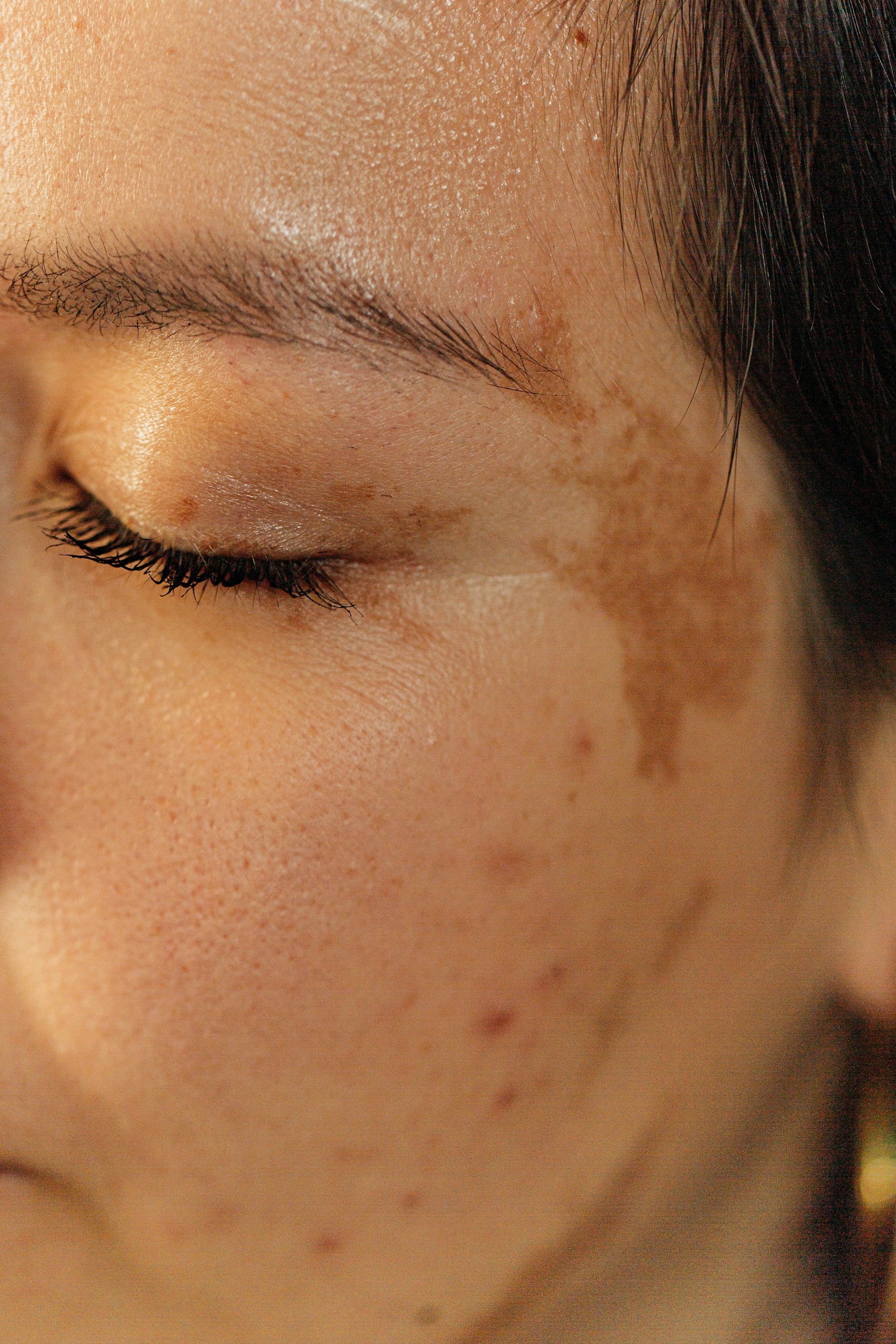
Pigmentation occurs when melanocytes, the cells responsible for producing melanin, become overactive or distribute pigment unevenly within the skin. This can be triggered by a combination of internal and external factors, including:
UV exposure, the most common cause of pigmentation
Hormonal influences such as pregnancy, contraception, or menopause
Inflammation or injury to the skin, including acne or irritation
Ageing and cumulative environmental exposure
Genetic predisposition
Common types of pigmentation
Age spots (solar lentigines)
Caused by long-term sun exposure, these appear as flat brown spots on areas frequently exposed to UV, such as the face, hands, and chest. They are more common with age and cumulative sun damage and often respond well to peels, skincare, and resurfacing treatments.
Melasma
Triggered by hormonal changes combined with UV or visible light exposure, melasma typically presents as symmetrical patches on the cheeks, forehead, upper lip, or jawline. It is more common in women and requires careful, long-term management alongside strict sun protection.
Post-inflammatory hyperpigmentation
This type of pigmentation develops following inflammation or injury to the skin, such as acne, eczema, or trauma. It appears as dark marks after the skin has healed and can affect all skin types, though it is often more noticeable in medium to darker skin tones. It may improve over time but can be treated with targeted skincare and professional treatments.
How we treat pigmentation at Auraline
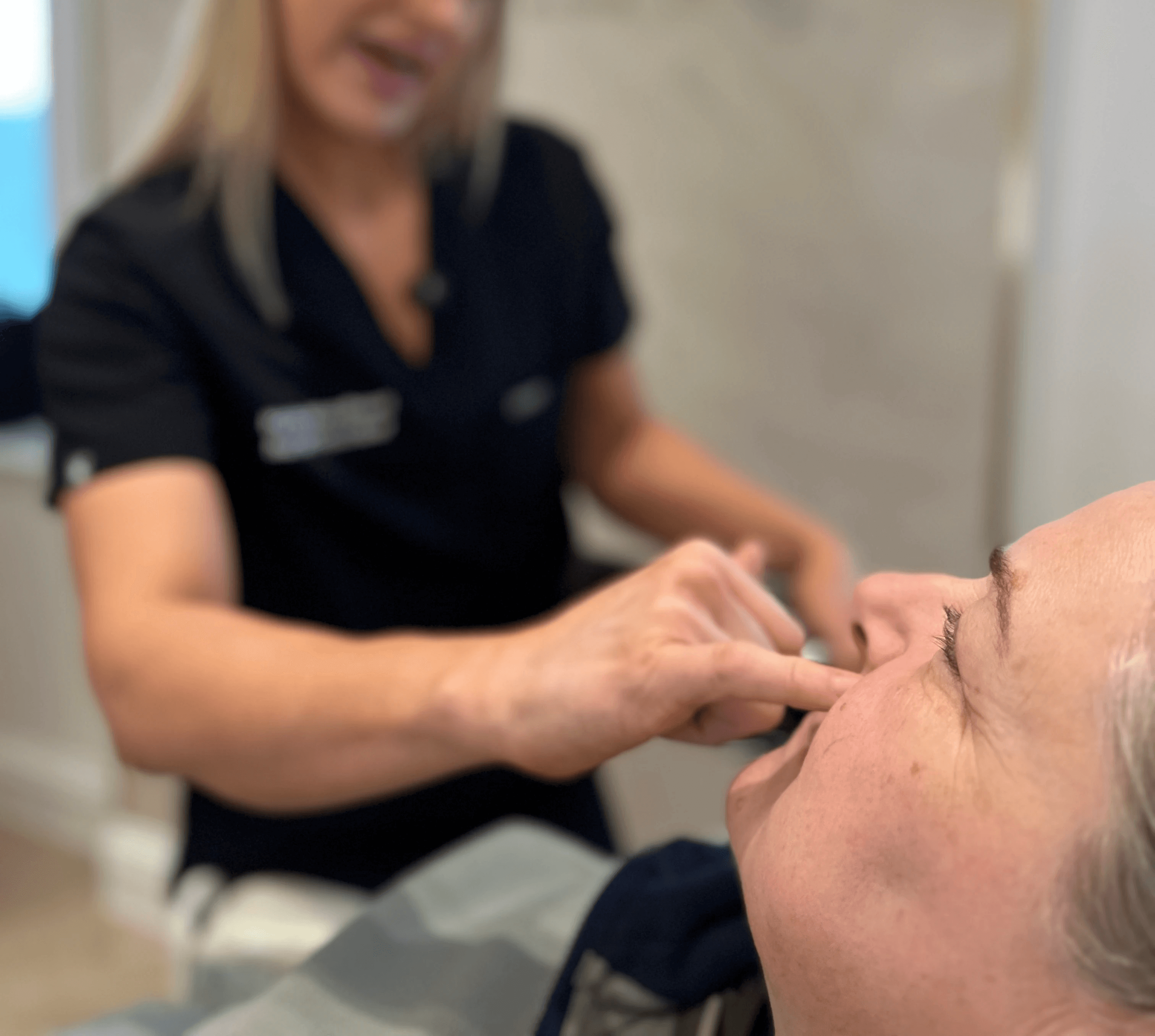
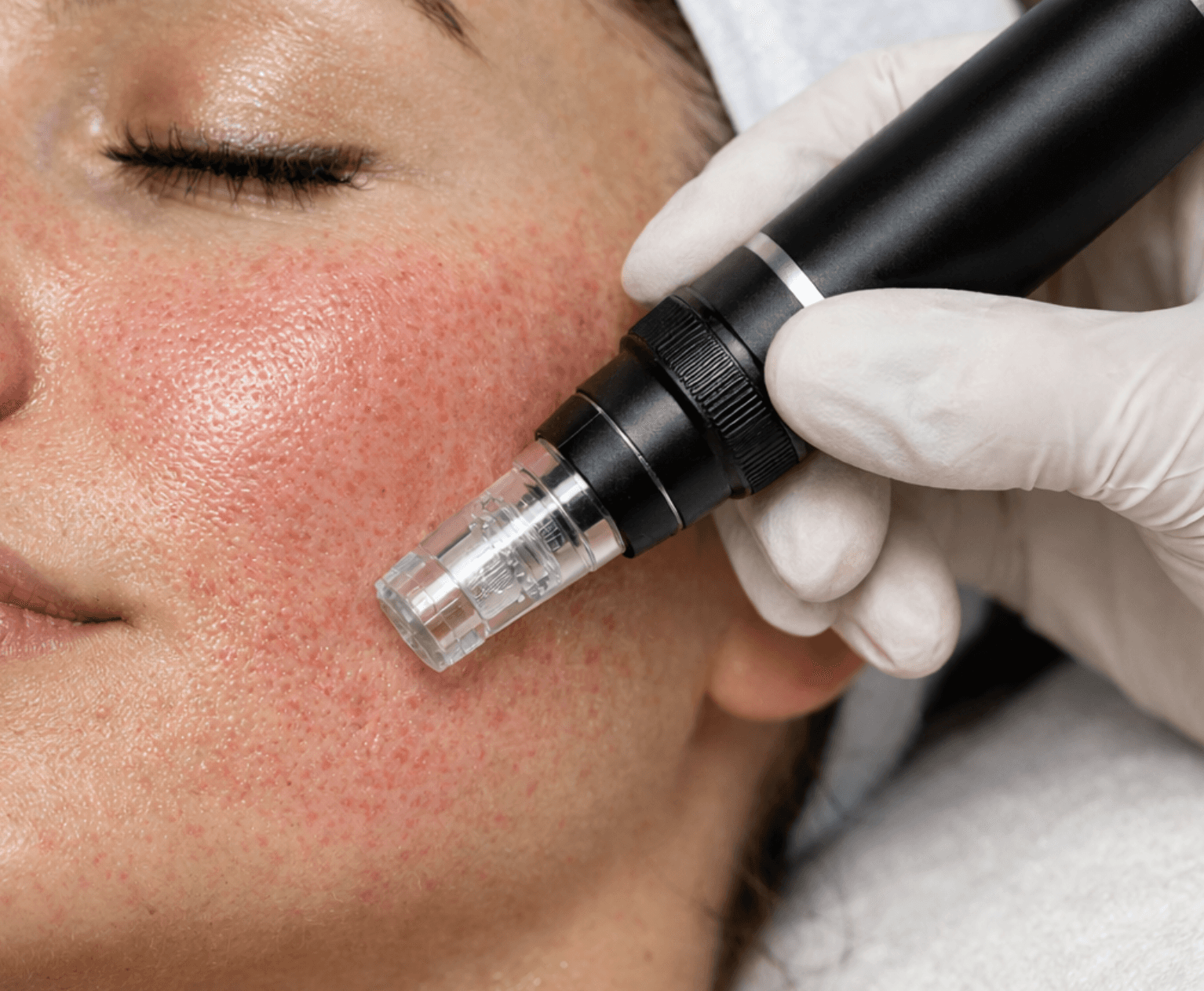
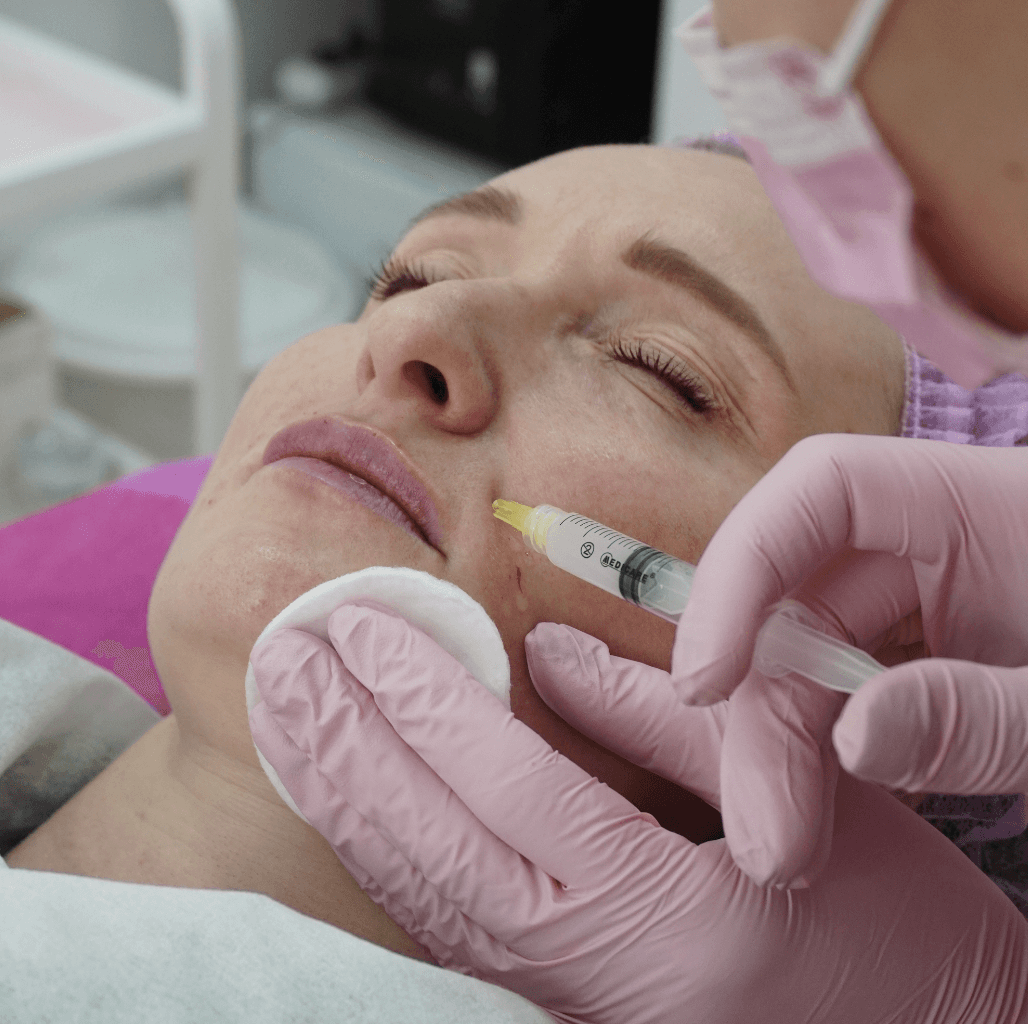
Our approach to pigmentation is targeted and medical-led, focusing on both correction and prevention. Treatment plans are always tailored to the type, depth, and cause of pigmentation identified during your assessment.

What results you can expect
A brighter, more even skin tone
Gradual reduction in visible pigmentation
Improved clarity and radiance
Smoother, healthier-looking skin
Pigmentation should never be treated with a one-size-fits-all solution. At Auraline Aesthetics, we take the time to assess your skin type, pigmentation pattern, hormonal influences, and lifestyle factors to understand the root cause of discolouration.
By addressing both the cause and the visible pigmentation, we create bespoke, evidence-led treatment plans designed to correct uneven skin tone and reduce the risk of recurrence, helping your skin become clearer, brighter, and more balanced over time.
If you are concerned about pigmentation or uneven skin tone, a professional skin assessment is the first step towards understanding your skin and identifying the most appropriate treatment plan.